Tuesday, May 10, 2016

Chasing Asylum: A short history of why it is you need to see this film


Over the past fifteen years I've felt at times furious, hopeful, depressed, exhausted, aghast, shocked, mournful, appalled, sorrowful, despairing - and ashamed- at the depths Australia has sunk to. We alone in the world imprison children for indefinite periods of time. We have the harshest and most inhumane policy towards refugees, even those whose countries we're actively militarily involved in. Our politicians are proud of this. Even when they are refugees at risk of persecution, torture or death, because they, or their family member, translated for the Australian army in Afghanistan. We are *that* country. If you are not ashamed of how we treat refugees then you simply are not paying attention.

Fifteen years takes us back the Tampa and children overboard, the Howard government that wanted us to believe, ludicrously, that refugees somehow loved their children less than Australians did. That they were the sort of people who would hurt their own children, people Australia needed to be 'protected from'. But the people harming children aren't refugees. They're employees and contractors, doing it with the Australian government's blessing and the logic of deterrence.

After that, the shame of ALP bipartisanship, Rudd and Gillard falling over themselves to promise that there would be no hope of a better life for anyone who came by boat. The bodies broken on the rocks of Christmas Island. Instead of seeing that if we'd processed their claims and flown them here safely like we've done in the past,we blamed them for the manner in which they fled persecution. Politicians made sport with their corpses to reinforce that stopping the boats with cruelty, with violence, and with torture was somehow the only ethical choice. We had to stop the boats in the name of compassion, never mind that we were only condemning them to a different death on other shores. Never mind that our message to asylum seekers of the world was being spelt out with the bodies of the ones unfortunate enough to have arrived here to ostensible safety.

Then in more recent years, the deaths of Reza Barati, Hamid Kazai, the Moss report - the children being abused and damaged, the sexual assault of women and children in our care, the UN finding us in breach of an international convention against torture - and Abbott saying we're 'tired' of being 'lectured to'. and the self-immolations Dutton wants to lay at the feet of advocates for asylum seekers. I realised tonight I've been fighting this, one way or another, for more than half my life now.

Fighting for human beings to be treated with dignity and respect. It seems absurd that this could be controversial. We get tiny steps forward towards humanity- we feel something when we see little Aylan, who could be a three year old from anywhere, dead on the shore. We feel something when Germany opens up its arms and shows what compassion and humanity looks like. We promise to take 12,000 Syrian refugees.* ) We surround a hospital to save a child from being sent back into hell. But there are massive retrograde steps, too. Australia deals with revelations about the abuse of children by making it a crime to report the abuse. Fifteen years is a dreadfully long time for something like this to have continued and gotten worse.

I know there are people who are sick of hearing about this. I'd very much love to no longer have anything that needed to be said. We need a solution that is humane, that respects human dignity - respecting the humanity of refugees and asylum seekers, and acknowledging the humanity within Australians. I am tired of having to be ashamed of the human rights abuses my country is perpetrating.

If this was TL;DR, then go and see this film.

If you're sick of hearing about this from me, go and see this film.

If you have ever wanted to know what your tax dollars are funding on Manus and Nauru, go and see this film.

It's not didactic, it's not lecturing, it's not going to do anything more than let you see what is being done in your name. What it does to people, children, families, that are not so very different from your friends, families, colleagues - excepting in what they have already had to survive, and what we are putting them through now.

Go and see this film.
http://www.chasingasylum.com.au/


----------
* although a better part of a year on, we've actually processed about ten per cent of that cohort- slower even than if they'd come through the normal humanitarian intake, like we're punishing them for making us feel something

Tuesday, February 16, 2016

Standing Room Only - Cures for a Compassion Fatigued Populace

It was the most crowded I had seen Manning Clark Lecture Theatre 6 at the ANU - more crowded than Intro International Relations. There were so many people stuffed in that they were four deep standing at the back, and perched on the stairs. It has been a movement that has at times been deeply inspirational, and deeply frustrating, as only a cause that has been suffering setback after setback since 2001 can be, but Canberra has been steadily coming out for refugees in the past few weeks after the M68 judgment was handed down. Canberra - and the rest of the country.

For a battle-weary social justice warrior, worn down with a politics that keeps sinking deeper and deeper until we are at a point where Michael Pezzullo, Secretary for the Department of Border Protection, can think he is scoring a legitimate political point when he fingers the ABC for confusing the stories of two children who were abused on Nauru, crowing that the five year old wasn't raped (but a ten year old was?) and maybe it was 'just skin-to-skin' contact (what is that supposed to mean? and would Pezzullo be so nonchalant about it if it were happening to his child?) and perpetrated by another young detainee (read: another child that we have locked up and brutalised, who may well be an abuse victim himself..?)... Wait, where was I? Oh yes. Pezzullo is a contender for worst human being in the world history of ever, and compassion fatigue is, I am pretty sure, where I was up to.

Then something like this happens, and damned if you don't all show me that Australians ARE better than this and we can say "It'll be right" and we can find it within ourselves to turn up and demand to be heard. It has been heart-fillingly beautiful to watch the Churches come out and call for sanctuary for refugees our Government wants to condemn to Nauru, and the states and territories, and the unions. It looks like all it took were some baby photos, really, for us to remember that these refugees are people and that a decent country does not treat people the way that we have treated them. Australia may be reluctant to celebrate their difference, but they might be ready to understand that we have much more in common with these people than we don't.

So this is a long delayed return to this blog, and blogging more generally, and it has not been my style to talk about my own reflections and moments. Snark is more entertaining to read and to write, and I know my earnest pursuit of People Being Less Shit To Each Other is tiresome and doesn't generate clicks. But if you've stumbled across this page for whatever reason; here are the two ideas that tonight's panel discussion on media and spin pulled from me.

Firstly, the control that government has exercised over media and information about asylum seekers in this country is unprecedented in any democratic country during peacetime.
Despite a department full of pencil pushers and mailroom boys and girls who have to wear a military uniform to go to their jobs in the old public service department of Customs, we aren't at war. Operation Sovereign Borders is one of the most insulting things done to press freedom in this country. We don't talk about stopping the boats or anything that happens on water, including whether or not the Australian government paid money to the people smugglers (whose business model we are trying to smash) to tow people back to Indonesia. People think this means the boats have stopped, which seems unlikely given the resources we continue to put into towing them back.

Paul Bongiorno talked about difficulties running stories on asylum seekers, specifically, the example of not being permitted to charter helicopters into the airspace above boats and to take footage of the people, the faces on those boats. It's hard to sell asylum seeker stories to a newsroom with other priorities, and certainly not the story about how part of the worst of what we are doing is that we are slowly but surely draining people of their hopes and their mental health over years and years in detention, where we aren't even processing them. The government kills the story by refusing to comment, by refusing interesting visual.

We don't so much have offshore processing centres for asylum seekers as an awful warning to others made from breaking the spirit of men, women and children, driving already vulnerable people who have already seen too much to depression and post-traumatic stress. Kids are jumping off buildings to die, or be injured badly enough to escape Nauru for medical treatment. We can't let them go to a more compassionate country because that will 'encourage people smugglers' - notwithstanding that the logic of that is that these people are condemned to indefinite detention in appalling conditions practically forever, simply to provide a warning to others. If we were to process and re-settle them, then they might keep coming, because that's better than a warzone or the Taliban. The logic of this kind of deterrence is to break people, to make children wish they had died at sea because at least then this nightmare would be over - because only then can we stop people maybe attempting to get here by boat and maybe drowning.

Well, if the churches can stand up against child abuse and the Victorian Premier can take some refugee children and some media to the zoo ,why can't media organisations run footage of the photos of the 37 babies on Nauru under running audio, explaining that they can't show any other visual footage because there's an $8000 non-refundable application fee for a journalist to try to get a visa for Nauru, and journalists covering the beat for years have been almost as long denied the opportunity to get past the gate and talk to anyone locked up on our behalf. There is no other vision, but here - we have some photos of the people we are doing it too. Look closely.

I understand this is an idea that is unlikely to gain any traction - that it is anathema to objectivity and impartial reporting, but there's also an obligation as the fourth estate. We are not dealing with a political climate where our media outlets are given access to the information to report, and there is no legitimate excuse for it. I think it calls for something more drastic. The media wields this massive capacity to shine a light on what is happening and to pressure the government to be more accountable. Instead it seems like what we get is 'there's no visual, or no departmental comment, so there's no story'. Surely it would be beautiful and defining moment of modern media if there was a stand to tell the stories anyway, visuals be damned, and let the absence of the visuals and the departmental comment stand as testimony to the contempt our government has for the rights of a democratic citizenry to know what is being done in our name.

Secondly, that the freedoms we take for granted are meaningless if we can't or won't use them to defend those without voices, those without freedom. 
I studied journalism for two years, transferred to law, and, as you may have noticed, I have opinions about lots of things, particularly about the crappy things that our government is doing or has done or suggests it might contemplate doing. I am not always diplomatic or restrained in expressing my views, I attend rallies and sign petitions, write blogs and argue with trolls on Facebook, and in terms of consequences I risk at most annoying some slightly bigoted Facebook friends who defriend me because I engage them in spirited and informed debate when they're being bigots.

There are definitely countries in the world where I would not exist. Where, even if that society were to let me go to university and study journalism or law, there would be rules in place which criminalised having opinions about or ridiculing those in power. And that's if I'm lucky enough to be in the sort of hellhole where the government bothers with the rule of law to restrain criticism, and not the other sort where I am just disappeared and dumped in a mass grave along with anyone else who looked sideways at the wrong person.

We believe strongly in free speech in this country, even if our laws don't really enshrine it with any real vigor. We believe it so much that angry bogans on the internet will get incandescent with bogan-rage at you if you dare to challenge their right to their opinion with facts and substance, as though having your ideas tested by reality is somehow synonymous with  censorship. We have people who are fleeing here, who are in border refugee camps around the world and on Nauru and Manus - who have not had that freedom, who are fleeing the sort of world where you don't sign petitions and attend rallies because the risk of the state police knocking on your door and taking someone from your family away is a real and terrifying one.

I have a voice and the freedom to express my opinions (so long as those opinions were not obtained in working in the offshore detention camps Australia is a little bit vague about its responsibility for). If I can speak out without fear of repercussions, then that surely creates an obligation on me, on all of us in that position, to use what power I have where I can to try to improve the situation of those who have no choice but silence.

Movements like this sometimes have to wait a long and painful time for their moment, but I am proud to stand with this movement, and I can only hope it continues to grow until it can't be contained in a lecture theatre or a rally, and the world we are protecting is one where we understand that there is more that unites us than divides us, and the greatest strengths of our society are not lessened by sharing them with those who come  to us for safety.

Thursday, September 19, 2013

Election Retrospective:- The Feminist Vote


The suffragettes knew what I’m talking about. They faced, in their fight for the right for women to vote, the fear that women given the vote would vote in a conservative bloc. That it would be effectively giving married men twice the vote of single men. That women were frail and delicate creatures not capable of rational consideration. Oh dear me no. If we had the vote, something something ovaries overheating, something something end of civilisation.

As a woman, I am surrounded by men and women who think they are better placed to tell me what my feminism should mean. People like Australia’s new Minister Assisting the Prime Minister on Women - [http://www.youtube.com/watch?v=BD1Lvds3N9g] - who think feminism is a stick to beat other women with. Our Cabinet representation is now a man who has said that he believes women are maybe just physiologically unsuited to being equally represented in high office - and he has demonstrated this by being unable to appoint more than one female colleague to his Cabinet. Because apparently the Liberal Party is entirely filled with women who are merit-less hacks (aside from their rampant sex appeal).

Faced with the claim that women especially should not have voted for Tony Abbott, given the constitution of his Cabinet and his well-known views on the role and status of women, I find myself perplexed. As a woman, I’d like the freedom to have voted against the LNP because I am terrified of what their immigration policy is going to mean, or because I want my gay and lesbian friends to be able to have the same rights I have. I’d like to be allowed to make up my mind based on the proposed defunding of the community legal sector, on which party will leave indigenous defendants in front of hostile and confusing courts without representation. I’d even like to be able to be like the whingey half of the internet who apparently voted exclusively on the issue of FTTH versus FTTP.

Election 2013 fortunately did not force me to decide between voting for a candidate who respected feminism and one who was going to support other values dear to my heart. It is luck that my feminism got to align with the other things that matter - rather than having to trump my compassion for stateless refugees or people from LSE backgrounds whose choices have been so much more limited than my own.

I think voting purely on self interest when you know it will disadvantage others is heinous. I must acknowledge that the pay differential between men and women, the difficulties in career progression, the chances of discrimination and assault, the ongoing challenge to the right to terminate a pregnancy - whilst all things women in Australia need to continue to fight for - are surely less urgent battles than fighting for something better for refugees. We’re offering them a lottery where the best possible outcome is a favourable first-instance administrative decision that says they can stay in limbo and reapply for a safe place to live every three years, and the worst outcome is being deported to the persecution and death they were fleeing. The plight of women in Australia may be difficult at times, but it is not desperate.

Thanks to my suffragette forebears, I had a choice. I could choose between the conservative white male candidate who undermined our first female prime minister and only begrudgingly acknowledged her contribution to the party and the nation - or the even more conservative white male candidate who thinks my whole gender is physiologically unsuited for high office. I could vote informally in disgust at the whole system, if I wanted to, and draw a phallus on my ballot paper like a surprisingly high number of my compatriots. Yet another dick option.

The right that was fought for was mine to exercise, and if I choose to be like the rest of the country and rank my genders’ equality well below my views on immigration, climate change, public education and access to justice - then have I betrayed feminism? Or is it when we let someone else’s idea of female self-actualisation dictate how women should exercise their right in fact the betrayal? We are not a monolith and we may well vote against our own interests with nary an incident of overheated ovary or internalised misogyny.

P.S - Anyone who thinks Sophie Mirabella's electoral defeat was celebrated primarily because she is a woman clearly doesn't remember  the much more substantial reasons for rejoicing in her defeat, like the views on public record, the comparison of Gillard's pricing carbon with Colonel Gaddafi slaughtering Libyan citizens,  that time she was the darling of the No Carbon Tax rally crowd and followed men with signs saying "Ditch the Witch" around the country. and the fact she wasn't actually much good as a local member for Indi.

Monday, September 16, 2013

The Australian gets it wrong on science journalism


The Australian this morning made science journalist baby Jesus cry.

Thankfully, the Guardian has done the best part of the necessary analysis of this for me, because clearly like News Corp websites, no one is coming to Blogspot (or tumblr) for scientific exposition from the largely unqualified. Thankfully.

Journalism struggles with technical fields. It seems like as the resources for print and investigative journalism have declined, the level of expertise required to cover the science and technology beats has only increased. For the average punter, this means a higher proportion of  press-releases making it barely altered into the mass media, it means more break-through stories about obscure foods curing cancer, and it means more science debate/proclamation by media release. It means more thinly-veiled advertorial posing as breaking scientific news.

Science journalism also suffers from the infliction of journalistic ideals which are appropriate only for other beats. I want objectivity in my news and current affairs. I want equal time given to equally weighted but alternate viewpoints. I don't, however, need to see a flat-earther on the program every time someone makes the point that the Earth is spherical in the pursuit of mythical balance. Some controversies are well and truly resolved. Being objective in a scientific field means being able to adhere to the scientific method, considering the weight of peer-reviewed evidence, and coming to a view informed by these things.

The Australian suffered more from agenda than ignorance. We know this because frankly, even the under-resourced science beat writers know citing the Daily Mail as your primary source for some kind of credible science analysis is at best, a crude circle-jerk of ignorance. Putting "according to the Daily Mail" might be appropriate attribution, but you may as well put "according to my abusive drunken uncle who thinks the moon landing was faked and that women belong on page six and in the kitchen"... If you quote an idiot, you're responsible for giving an idiot further undue prominence. It does not absolve you of a duty to ensure what you're reporting actually bears some slim relation to the truth. Nor does it absolve you of seeking some comment directly from the people you're quoting as confessing they're wrong. You can do it here alarmingly easily.

"The IPCC was forced to deny it was locked in crisis talks" - because it wasn't in crisis talks.  This is the journalistic equivalent of beating your sister with her own fist, shrieking gleefully "stop hitting yourself, why are you hitting yourself!?" The writer of the Oz article is presumably forced to deny his paper is made predominantly from the excrement of rabid swine mixed with the leavings of mining magnates, or he would be if I put this question to him and it was not in fact the case.

If you didn't go there at the start of this article, go read what the 97% have to say about the tropes of climate denialism that have been on rampant display in failed science journalism across the globe this week, crudely and uncritically rehashed by the Australian.


The Australian (and the writers of the media releases uncritically reproduced by the Daily Mail and then republished to support the Oz's confirmation bias) achieved the linkbait success it was after. Since we all know the Strine's take on science is pretty clearly that it is a thing which can be won or lost by media prominence and not through any objective empirical method, today's climate denialism linkbait is the Australian's WIN FOR SIENS!


Thursday, September 12, 2013

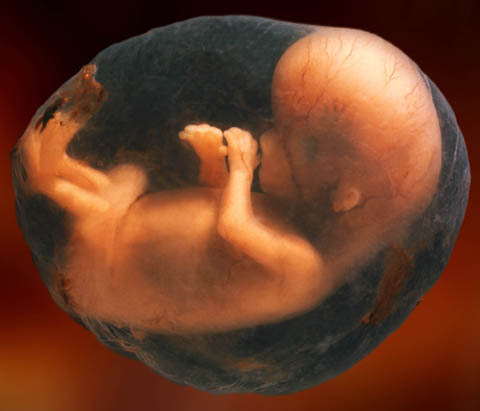
Zoe's Law: What Cost Extending Personhood Pre-natally?

A potential victim of crime.

Zoe's Law is a bill currently before the New South Wales Parliament to amend the section of the Crimes Act dealing with grievous bodily harm, adding a specific definition of 'unborn child' (being a foetus of twenty weeks or more gestation, or a mass of at least 400g).

Most troubling for pro-choice advocates, it includes this provision:-


(2) For the purposes of an applicable offence:                                         
(a) an unborn child is taken to be a living person despite any rule of law to      
                          the contrary, and                                                           
(b) grievous bodily harm to an unborn child is taken to include the                
                          destruction of the unborn child. 

There are savings provisions to the effect that the section does not apply to medical procedures or acts by consent of the woman concerned. These exist to placate women worried about the erosion of their right to decide to legally terminate an unwanted pregnancy. Why we might be worried by this type of reform? We only have to look to Georgia, USA in 2011 - when a representative tried to pass a bill that put the onus on women who miscarried to prove they weren't guilty of murder. NSW Liberal MP Chris Spence, who introduced the bill, should be able to understand why women's advocacy groups are touchy on this subject. Granting personhood to a foetus is traditionally a legal position that has not boded well for a woman's right to choose to take a pregnancy to full term or not.

Mr. Spence has beseeched anyone with doubts about the intent of Crimes Amendment (Zoe's Law) Bill 2 (2013) to go read the second reading speech. Heavily doubt-laden, I did just that. I learned that the bill is a response to a case where a woman (Brodie) was crossing a road when she was hit by a drug and alcohol affected motorist. She was thirty-two weeks pregnant at the time.  The force of the impact caused extensive injury to her - shattering some of her bones. The previously healthy foetus, which she had named Zoe, was stillborn. The driver responsible was charged, and served jail time for the offence of grievous bodily harm of Brodie. Zoe was listed as an injury to Brodie, not a death in and of herself. The core part of this issue seems to be that the parents felt less vindicated in their grief because their unborn child was not treated as a person for the purposes of the Crimes Act.

Mr. Spence refers to a variety of legal mechanisms which apply only to a foetus lost after 20 weeks. The loss must be recorded with Births, Deaths & Marriages and certificates issued. The baby bonus is available. Maternity/grief leave is available. It seems an arbitrary line. In circumstances where a birth is happily anticipated by a mother, if the pregnancy fails at 19 weeks and two days we don't extend the baby bonus or maternity leave, and this feels arbitrary and wrong.  Does a matter of days or weeks make that much difference between the grief felt over a miscarriage? I suspect not. Drawing the line at 20 weeks for the state to include vengeance into criminal statute is similarly arbitrary and insufficient, if the goal is to give grieving parents satisfaction. It is an area which I think must be deeply personal and deeply subjective, and in such fields the law is an indelicate instrument.

Sunday, September 1, 2013

Caveat Emptor: Team Abbott Confused Between Election Campaign and Guthy-Renker Infomercial


Source: Opposition Leader Tony Abbott revealed on Thursday evening that he would not be providing final costings and a full budget impact statement until deep into the last week of the campaign. [SMH]


$200 for relationship counselling for heterosexuals looking to legally marry? Thanks Tony! But wait, there’s more! Bailouts to the chocolate industry in Tasmania? Hey, Tasmania likes chocolate, *and* jobs! What a top bloke! But wait, there’s more! How would you like to be paid your actual wage to stay at home and have children, women who are usually on quite a good wage? How do you get this shiny, shiny, life-changing deal, I hear you ask…?


There can be no real sensible reason to refuse to price policy announcements, particularly in light of a promise to return to surplus with deadline. It seems like a sales tactic, an emotional mugging. Do they really think that voters will be so emotionally invested with, say, the prospect that they can start a family sooner without having to tighten the purse strings - that by the time the cost is announced they won’t even care how much it costs, and won’t be rationally linking it with job cuts in the public service, reduced infrastructure in health and education, and another long delay before Australia gets up to a global standard with internet speeds?

Does Australia want a puppy? C’mon, hold the puppy. Love the puppy. Give the puppy a name. Oh, look, the puppy loves you! How much for the puppy? Let’s not talk about that just yet, we haven’t told you yet that you’ll get a free lead! In *any colour* you choose. But wait, there’s more! Book now and get 50% more cute for *free*! How do you get this fabulous, life-changing deal that may also cure cancer and make you attractive to the opposite sex? Do you even care at this stage? Look at the cute puppy. You want the cute puppy? You *need* the cute puppy. Okay, for the low low price of 26 easy installments of $899.99, (what a steal!) the puppy is yours! If you call in the next fifteen minutes, we’ll throw in some plastic stuff that also looks pretty good at the moment. And another free puppy! And because no exciting infomercial package is complete without them, handy-dandy steak knives! They cut things! How can you live with yourself if you don’t take up this offer RIGHT NOW?

Worse, though - at least at 3am when you cave to the hypnotic tones of the Lifestyle channel and concede that you need a puppy, your 26 easy instalments are a capped and predictable final fee. Policy costings like vouchers for marriage counselling cannot really be subject to an accurate and finite figure. Costs sometimes blow out, and if the costings are not done independently and with sufficient time that they can be subject to critique - they are more likely to do so.

If nothing else, a group hoping to run the country should be expected to demonstrate that they are able to be upfront with the electorate about the realities of their policies, including the costs, in a timely manner that doesn’t look like a sales technique - so that rational decisions can play some part in the ridiculous circus that is the election campaign.
After all, unlike exercise equipment and beauty treatment pseudoscience, an election result can’t be mailed back within 14 days for a full refund.

Wednesday, August 21, 2013

The Biggest Bastards in the Bastardry Competition

Dear Major Australian Political Parties,

Refugees are real human beings fleeing awful and terrifying things. You seem to have mistaken them for child molesters, people who don’t turn their phones off during live performances, and Nickelback fans.

It is not okay to threaten/promise that, if elected, you will ensure people who are desperate enough to risk their lives to escape persecution, will be, variously, shipped off to developing nations which have their own issues, towed back out to sea to drown, or denied access to the protection of the legal system against wrongly decided administrative decisions (because “too many” people are being found to be genuine refugees). It’s not okay to bung them on Temporary Protection Visas, force them onto work for the dole schemes, and put more families onto unseaworthy boats because family reunification is impossible under legitimate means.

It’s not okay because we as a nation agreed to obligations under the UN Convention on Refugees to not be a douchebag of a global citizen, and it’s not okay because it goes far beyond what should decently be done in the names of an Australian public that can be better than this - that can be generous and kind to those in need, that believes in at least the rhetoric of a fair go.

If the best way to judge a society is by how it treats the least amongst it - how it treats the poor, the frightened, the huddled masses - then the politics played with refugees in the belief that it will score votes is an indictment on us all.

After all, if you wouldn’t do it to a Nickelback fan, why should you do it to a member of an ethnic minority, or a child whose parents risked everything to send them somewhere they would be able to grow up safe?

Enough racing to the bottom. No party that is determined to sell itself as being biggest bastards in the bastard competition when it comes to kicking some of the most vulnerable and defenseless people in the world deserves to win government and lead this country.
 
Yours sincerely,
CisforCurmudgeon

Sunday, September 2, 2012

RU486 Serious?


Restrictions on the importation of abortion drug RU486 in Australia have suffered a quiet defeat, with Marie Stopes Clinic being granted a right to import the drug, which has not been widely available here. It was only in 2006 that the ministerial veto over prescription of this drug was lifted.


The right-to-life (or anti-choice) campaign is likely to be savage in its response, as anything that makes abortion 'easier' or safer removes the unduly punitive nature of surgical abortion as the only way out of an unwanted pregnancy. Because of course, women apparently make the complex ethical decision to have, or not have, an abortion based largely on their squeamishness about  invasive procedures. Ladies, good news - we can go slutting it about and mercilessly slaughtering fresh generations of the unborn as we pop RU486 like contraception candy! Now we don't have to fear the clotheshanger or the surgical vacuum, there's no reason to continue being rational adult human beings doing their best to take adequate sexual health precautions!


If the above sounds like an absurd parody of how real people might actually behave, it's meant to. In the coming weeks, as the pro-life campaign gets under way, watch the language and materials being used. If past materials are any indicator, where the person seeking the abortion is referenced at all (and often they are not, with the focus squarely on the potential baby)  it is often implicitly as someone thoughtless, selfish, irresponsible - or as an infantile, morally underdeveloped creature in need of paternalistic guidance. Seldom does it refer to women as complex human beings capable of rational and ethical determination, deserving of agency in their own right. It follows that people prepared to reduce women as a class to such diminuitive and powerless stereotypes are probably not the people that women who do not recognise themselves in these stereotypes would like to have controlling discussions on their health.


Those who wish to prevent someone else having the opportunity of informed choice in terms of continuing or terminating a pregnancy really ought to have no say in how easy or difficult the procedure is medically. This seems equivalent to handing control of the blood bank to Jehovah's Witnesses. If someone has a strong moral view that suggests that they will never, ever have need for a particular medical procedure, they should have no say at all on what form that procedure should take for other people. Government having recognised the exigency of allowing women some say over their own bodies have gradually eroded the criminal sanctions which have applied to abortion procedures in years past. These changes have largely happened in our lifetimes. Given that termination of pregnancy is a recognised medical need, the only views that should matter are those of medical experts and medical best practice. Incidentally, the World Health Organisation recognises RU486 as an essential medicine.


Despite massive leaps forward in recent times, the state of the law regarding abortion is still reflective of a past era. It is only in the ACT that medical abortion is straightforwardly legal. In Queensland and New South Wales it still exists in the Criminal Code as an offence for both doctors and patients. Since 2008, Victoria has decriminalised abortion if performed by a medical practitioner within the first 24 weeks of pregnancy. In South Australia, and the Northern Territory while access in practice to a safe abortion is relatively unproblematic, the patient must still pass a relatively arbitrary 'maternal health/fetal disability' ground, as though pregnancy itself was not life and health-threatening. In Tasmania, it's lawful to have an abortion only if two doctors agree there is a health risk continuing with the pregnancy, and counselling is compulsory. In practice, the lack of availability of chemical means of procuring an abortion has led to many women having to endure invasive surgical procedures, on top of what is likely to already be an emotionally and psychologically difficult situation.


Those in this debate who believe that women should be compelled to carry to term every child ever conceived talk of 'a right to life'. They stand, valiant soldiers in the battle to ensure that the foetus who is likely to be born to a mother who lacks the capacity to care for that child, or who is the product of rape or failed contraception has a right to be born, a right to exist. They are curiously silent when it comes to that child's right to proper care, right to a home, right to affection, right to the care and protection of a parent who is capable of providing both. In 2010 to 2011, there were nearly 12,000 children known to the government put into formal out of home care because they lacked a parent able to care for them. In 2011, there were a total of 37,648 children aged 0 <17 living in out of home care arrangements nationally. Many of these children will grow up to become adults who have the state involved in removing their own children. They in many cases do not have the stability in their lives to form the attachments to a carer that are so critical in future relationships and development.


Every child should have a right to be loved, wanted, cared for, to feel secure, to have a stable and safe environment to grow up in. Not every woman who becomes pregnant is in a position to provide this, and we can see that despite the best efforts of government, a state-provided alternative does not guarantee it either. These rights could reasonably be considered as more meaningful than a right to be born which is, in practical terms, a right to be enforced against pregnant women.


This argument however is not on whether abortion is the best choice for all women, or for women in difficult life situations, or even that it is an easy one. Of course it is not. It is however clear that it should be a matter to be determined by the woman whose body it is. Given that, there can be no ethical right or reason to restrict access to the medical best practice option for terminating unwanted pregnancies. Denying women who seek an abortion access to the safest option to do so can be nothing but the product of a perverse desire to punish women seeking an abortion, and to use the woman's health as an ideological battlefield with the end goal being to revoke any choice at all. This strongly suggests a value for the 'life' of a cluster of cells which only have the potential to become a human being over the life of a realised adult human being, capable of thought, expression, and the possession of rights. Just as we don't give vegetarians a determinative say in the running of the livestock industry, we must be wary of those who would regulate away the safest way of terminating an unwanted pregnancy when their end goal is the the total removal of safe and legal access to abortion entirely.


Want to do more about this? Contact your local MP (or send an email to ru4itcampaign@gmail.com who will forward it on) and have your say. Ladies, you can rest assured that a lot of people who don't have a uterus but who have views on what you should be doing with yours will be doing just that and in crusading numbers - if you want your views about your own bodily integrity to count now and into the future, make sure they're heard now.  With the looming possibility of a Coalition Government led by Tony Abbott, who fought so vociferously to enforce his own moral position on Australian women and to prevent women access to RU486 in the first place, another chance may be a long time in coming.

Also, check out the RU4IT campaign:
http://ru4it.wordpress.com/ 


Monday, October 10, 2011

Does Andrew Bolt Love Horse Cock? (Or: Why Freedom of Speech is Relative)


I confess I was looking avidly forward to the result in Eatock v Bolt, on the basis that the decision would either result in the expansion of the implied constitutional freedom of political communication in Australia, or it would result in Andrew Bolt receiving a widely publicised kicking and his followers engaging in highly entertaining championship tantrum-chucking.

Either one of these outcomes contained sufficient silver-lining to offset any negatives I could see. In the wake of the public spanking delivered to Bolt by the Federal Court, several things about the nature of free speech in this country have become clear.

Firstly, Andrew Bolt's free speech did not in fact extend to making factually innaccurate claims about pale-skinned indigenous Australians which had the effect of damaging them as a class . By the way, ragey tantrum-chuckers of the libertarian fringe, this doesn't mean that we live in less of a democracy than we did before Eatock v Bolt. A right against Bolt in such circumstances against racial vilification was only one civil option - the standard vanilla defamation proceedings would probably also have been successful.

Bolt's free speech didn't extend in this way because no one's does. It has always been limited by injunction, defamation remedies, rights to privacy and non-disclosure policy, and expanded and protected through alliance to a limited right to political information, which is derived from the notion that since we must vote, we have a right to make that decision without having access to that information hindered. That right has been extended to broadcasting material obtained of animal rights abuses while trespassing (Lenah Game Meats), prohibiting the government banning political advertising in the lead-up to an election (ACTV), or reasonable political critique (Lange). What is clear from the case law is that we're talking, with the possible exception of parliamentary privilege defences, of a situation where free speech derives from a right to be informed. It clearly runs into problems where the speech is baseless opinion misrepresented as authoritative fact.

As well as these restrictions, freedom of speech is, and has always been, a right which is correlative and accountable to other rights. It has never been unlimited. My right to photograph you in the shower and publish those photographs does not trump your right to privacy, and it shouldn't. Nor do I have an unqualified right to publish an article about someone who is not a public figure, making accusations about them without bothering to check the factual accuracy, or, knowing there is no fire, to shout 'fire' in a crowded theatre. This should not be mistaken for state censorship -there is nothing preventing me putting that speech out there in the first place save my own awareness of the consequences, legal, ethical and practical, of so doing. If one is trampled in a panicked mob trying to flee a theatre which is not in fact on fire, well, that is a consequence of having shouted 'fire'. Similarly, a group of people you have attacked in a nationally syndicated newspaper bringing a civil claim against you is a consequence of the initial decision to publish. There's a reason for the phrase 'Publish, and be damned!'.

For example, if I were to make the claim that Andrew Bolt is routinely indecently engaged with farmyard animals. This is a claim that I cannot verify based on my current experience, nor one which I am basing on an authoritative source or considerable research. I could perhaps look through some of the columns he has written, and make use of innuendo to suggest such things, but on the face of it, I am likely only to turn up enough to suggest Andrew Bolt hates PETA and has changed his mind a few times on the live animal export issue. Our defamation law works such that even if it were true, publishing would as a starting point be grounds to sue for defamation simply as something likely to impair the reputation of the ordinary reasonable person - because, again irrespective of truth- we assume everyone's reputation is good at common law. Were I able to show any of a range of defences - such as truth, genuinely/honestly held belief - or make arguments on the mitigating factors, I may still get away with publication of such vicious rumour and defeat any defamation suit that's brought.

Most major media organisations have in-house legal counsel, whose job it is to answer questions about whether publication of a particular article is likely to open the organisation up to legal liability. Often, in practical terms, the decision may come down to not 'Is this libelous?' but rather 'Is the person we are libelling likely to sue?'. In the case of Bolt, the gamble is that Bolt's abrasive style and casual bigotry sells copy, and sales of copy mean the lifeblood of advertising revenue continues to flow. If no one sues - or if they reserve their right under the Australian Press Council to file a complaint (and thus waive a right to sue), then the paper wins out by publishing anyway, even when they know it's likely to be libellous.

In this case, one more attempt by Bolt to chip away at the credibility of indigenous rights in Australia did not go unchallenged. If you're outraged there's a law saying your free speech is limited by hate speech legislation, you should probably be even more outraged about the overuse of injunctive relief in interim civil cases and the use of defamation law to shut down critique of those with the money to launch applications for injunctions with relative ease. If you're not - if you're just angry that Bolt got slapped around for making a (not particularly well-informed) point about light-skinned Aboriginal people having access to government funding and grant programs, a group who initially didn't even seek damages, simply a judgement against - then maybe you should be wondering what your free speech is worth. When someone is allowed to pump untreated sewerage and profitably sell it as Evian, the marketplace of ideas needs a rethink.

Wednesday, May 25, 2011

Australia Has A Lot of Gay Friends, But...


Dear Local Australian MP,

In the world in which we live, the phrase "I have a lot of gay friends" is almost always a signpost for some form of bigotry. It usually prefaces words like 'but' or 'and', as though the speaker is keen to clarify that while they personally know plenty of gay people, they don't see a need for the political progress that is necessary to ensure that the LGBTIQ members of our community feel the full benefits of community membership and equal rights with their neighbours and friends. It is a peculiar and condescending kind of friendship that sees our friends treated with less respect and as lesser citizens purely because of the people that they love.

My friend Hannah spends long days working with Amnesty International, fighting for the political freedoms of people she will never meet. The Australian government won't let her marry her girlfriend, as though somehow their love is worth less than the love of any heterosexual couple, as though it is less considered, less passionate, less true.

My friend Victoria's parents nearly disowned her when she discovered she was in love with a woman. She faced harassment and bullying at school, a hostile home environment, and a government which sees a lesser recognition of the relationship she has suffered so much to realise and protect as unproblematic. She has always been a very traditional, family-oriented person, and marriage has always been important to her - her realisation that she would never be able to pledge her love and commitment to someone, exchanging rings and vows before trusted friends and family, was something that struck at the very core of her identity. I can't help but think that the hateful things she has heard were somehow made stronger because by not legalising gay marriage, the Australian government implicitly endorses the homophobic sentiments and attacks she has faced.

Another friend lives a life of quiet desperation, scared to acknowledge his longterm roommate as his life partner because he believes the most important relationship in his life is stigmatised in our community. He is a bright, senior and respected man who contributes a great deal to Canberra's community, and he feels that if people knew he was gay he would be respected less. Our Australia hurts him, too, because our government continues to signal to the him, and to our community at large, that there is something wrong with homosexual relationships, that there is something okay about treating the love between two men as somehow lesser. Our governments at territory and federal levels say "We have a lot of gay friends, but"; what we hear is that some loves are more equal than others.

So many Australians have similar stories. So many of us have brothers, sisters, family, colleagues, neighbours, friends - who are injured by the refusal of our politicians to take this necessary step - the simple recognition of gay marriage - to remove another bastion of inequality, another arbitrary barrier that serves only to harm. It is a move that costs so little, but means so much to so many.

Although I am not gay, I have a lot of gay, lesbian and queer friends, colleagues, neighbours. We share classes at university, cubicles at work, smiles on the bus in the morning on the way down Northbourne Avenue. We share a common humanity, we share dreams and aspirations for our own futures, and for an Australia which is fairer and more inclusive - an Australia which says that any dreams I may have of one day meeting someone I may want to marry are no more valid than similar dreams of my gay and lesbian friends.

I have a lot of gay friends, Mr. Local MP, and I'm tired of hearing my political representatives tell me that they personally support marriage equality, 'but...'. This is 2011. It is past time we stop making excuses for not helping our friends, for not protecting the members of our community. It is time our government stops quietly offering legitimacy to the sentiments of homophobes and bigots, and openly recognises that preserving marriage exclusively for heterosexual couples is the denial of a basic freedom which should be open to all Australians. Denying the LGBTIQ identifying people in our community any privilege otherwise open to heterosexual couples is discriminatory policy which belongs to an uglier era.

I trust that you will take these sentiments on board, and look forward to a more inclusive Australia.

Yours sincerely,

Canberran Curmudgeon

[This first appeared on the Letter Amnesty blog, where there are more brilliant, eloquent, poignant and strongly persuasive letters to MPs. It's a good place to start if you're inspired to write to your local representative to tell them how you feel about marriage equality.]

Tuesday, May 3, 2011

Heads on Spikes Are Sooo c.1650.


In an address that stopped a nation, President Obama confirmed for the world what twitter had been guessing for a few hours; Osama Bin Laden, significant Al Qaeda figure and the face of the twin towers attacks nearly a decade ago, was dead.

He had been killed in a firefight in a mansion in Abbottisbad, Pakistan. The body had been dumped at sea. The conspiracy theories began circulating almost as fast and loose as this falsely attributed Martin Luther King quote: "I will mourn the loss of thousands of precious lives, but I will not rejoice in the death of one, not even an enemy."

A quote like this goes viral because it resonates with a sentiment which we feel we cannot express for ourselves - perhaps we feel unqualified, or ineloquent, or alienated by the more mainstream sentiments being expressed. In this case, this quote validated that feeling that there was something barbaric about the jingoistic fervour, the chants of "U-S-A!", the self-congratulatory ceremonies and celebration over a violent death.

I watched horror-struck as the plane flew into the second tower nearly a decade ago, as the buildings collapsed. As people jumped to their deaths to escape the smoke and flames, the uncertain death that their workplaces had turned into. As the death tolls climbed and the pieces of human wreckage were pulled from the rubble. I make no apologies for those who planned this nightmare, saw to its execution, and celebrated the fear, suffering and trauma that was its aftermath.

The world sat largely silent as the US launched first strikes against Kabul, bringing shock and awe into our living rooms and the horror of industrial warfare into the lives of Afghani citizens too poor to flee. There seemed to be a sense that such a response was necessary, because how do you wage a war against dead hijackers? How do you wage a war against a force which has no state? How do you feel safe as a citizen of this world, and how do you protect your own state? There was a sense in which even though the links between 9-11 and Afghanistan were tenuous*, the world recognised that America needed to do something other than lick her wounds and worry about what happens next.

I was disgusted at the parties in the West Bank, the comments that the US somehow deserved September 11. The sense that there was anything righteous, anything to be celebrated in the death, destruction and grief of that day left me cold. Commentators rightly came out to condemn these displays.

Where were those commentators when the mobs gathered to chant "U-S-A!" and pump their fists in the air? Where were they when an ex-judicial slaughter was described with gravitas by the President of the United States as 'justice' having been done, as though justice and vengeance are synonymous? I am not sad that Bin Laden is dead, but I am sad that this event reflects that humanity hasn't progressed much ethically beyond heads on spikes, saber-rattling, primitive, barbaric. A grave recognition that a violent act may be necessary is not the same as cheering for an execution.

Martin Luther King did say:
"The ultimate weakness of violence is that it is a descending spiral, begetting the very thing it seeks to destroy. Instead of diminishing evil, it multiplies it. Through violence you may murder the liar, but you cannot murder the lie, nor establish the truth. Through violence you may murder the hater, but you do not murder hate. In fact, violence merely increases hate. So it goes. Returning violence for violence multiplies violence, adding deeper darkness to a night already devoid of stars. Darkness cannot drive out darkness; only light can do that. Hate cannot drive out hate: only love can do that."


There is something unevolved about an eye for an eye, something dark, primitive and regressive that reflects the very worst motivations in human behaviour, that makes us all less safe. Our world is littered with political speeches claiming moral high ground against an opponent, but it is our conduct which defines who we are. If we are attempting to celebrate the ending of a life from the moral high ground, it may be time to cede our claim to it.


Link


*
You may recall that the grounds were that the Taliban, repressive and evil but not fantastically well-resourced, did not hand Bin Laden over to the United States when asked to do so. This would be the very same Bin Laden it has taken one of the wealthiest, most technologically advanced military powers of the world nearly ten years to locate.

Wednesday, April 13, 2011

Cigarette Smoking is the New Ugly Green


Actually -- I'm not a smoker, and I've never really aspired to smoke.

It smells unpleasant, yellows teeth and skin, has various associated health risks and was immensely popular with all the people I aspired to be nothing like in high school. Add to that it's rather addictive and relatively expensive, and not smoking is a fairly easy decision to make.

The example of the inimitably cool Hunter S. Thompson and the romance of the smoke-filled press-rooms of yore, , the fact that it gives the socially awkward something to do with their hands and a quiet space to bond with others, and that it apparently helps maintain a svelte figure and looks cool in film noir is still not enough to convince me to buy and smoke cigarettes. My disapproving Grade Three teacher mentally looms Obi-Wan Kenobi style over my mid-twenties consciousness, tutting over the barest inkling of a thought that smoking might be that elusive step I need to take to be cool. Realistically, of course, I'm so far from cool that the minor image rhinoplasty of rebelling against relative good health is not going to be much help anyway.

This means I'm probably not the target for either the new mandatory snot-green plain packaging measures designed to make smoking less trendy, or even the reaction campaign by cigarette companies concerned to make the colour of cigarette packaging a civil liberties issue. By the way, congratulations Australia - if this is the direst emergency for individual rights going around, we might've just won best country in the world. Yeah -- Suck it, Sweden.

Cigarette companies are conscientiously very worried for small businesses, who are apparently going to find it time consuming and expensive dealing with selling cigarettes without conspicuous branding and it's going to put them all out of business... and, we're reminded, it won't work to stop smokers smoking anyway and it's an entirely pointless exercise of minor irritation.

If we look at the market for cigarettes, we'll see that it's made predominantly out of pre-existing smokers and prospective new smokers. Since this is a product which eventually kills most of its consumers, attracting people who don't currently smoke to the path of lung cancer is the way to increase profits and market share. We also know that smokers tend to be fairly brand loyal, and this is despite the decrease over time in allowable cigarette advertising, because smoking and purchasing cigarettes eventually become habitual behaviour. This means that it may be easier to increase sales by attracting new people to smoking than it is to convince a smoker to switch brands.

Given what we know of the behaviour of smokers as consumers, it seems odd that cigarette companies feel genuinely threatened by the advent of plain packaging. If all brands are forced to have the same shite packaging, this actually removes an element effectively creating a branding demilitarised zone, where all of a brand's competitors are being compelled to behave in the same way.

This surely means that cigarette companies are more concerned that olive green packaging will stop people taking up smoking in the first place, and so impact their bottom line. If the risk of lung and throat cancer's not going to do it, I hesitate to suggest an ugly package will have that much impact - but why else is Big Tobacco splashing out on these campaigns?

Funding public information campaigns for corporate self-interest is not new, and it makes sense as entirely rational behaviour for a corporate entity to engage in - if a new tax will cost your business $1 billion, but you can stop it with a $6 million television, radio and print media blitz aimed at convincing the average punter that your interests are their interests, then it makes rational sense to do so. We've seen it with the Mining Super Profits Tax, too (Clive Palmer really cares about your superannuation, kids, that's why so many of his profits stay in Australia). We'll see it again as various interest groups come out against carbon pricing, too. What these campaigns tell us is that someone within the corporate interest group has crunched the numbers and discovered that even a very expensive campaign will be cheaper than the cost of successful legislative reform.

So, cigarettes are doing us damage and green packaging is apparently going to make fewer people take up smoking, even the tobacco giants are placing their bets there. Cue half the Australian denizens of the internet calling for the government to show some stones and raise the excise by more than 50 per cent in line with the recommendations of the preventative health taskforce. Why, if the government wants to make a moral statement about cigarettes, do they not just raise the excise to price addicted smokers out of the market, or ban cigarettes altogether?

Libertarian moral panic inevitably follows, trailing conspiracy theories about how wedded to the income from tobacco excise the Australian government really is, so much so that it's worth the extra costs to the healthcare system which smokers inevitably bring. If the government really wanted people not to smoke they'd make it much more expensive, they say, with the kind of po-faced ignorant sneer typical of those who find the arguments presented on bumper-stickers compelling.

Smoking excise is a regressive tax. It's a tax targetted disproportionately at those of lower socio-economic backgrounds who are more likely to smoke. As an addiction, it becomes for some households a necessity in the family budget. Making cigarettes cost more means some families will buy less bread, milk, schoolbooks, and moreover it leaves the government open to accusations of cash-grabbing by the sorts of people who think speed cameras exist purely to raise revenue.

A balance needs to be struck between disincentivising smoking through pricing signals - because we don't want to be seen as promoting risky behaviour amongst the poorer groups within society- and recognising the nature of addiction means that people will often buy the product of their addiction even when they cannot afford to.

Sure, if the government really wanted to stop people smoking, they could ban it entirely (because that worked so well for alcohol in 1930s America). They could legislate that cigarettes have to taste like rotting arse, too. They could require that they be available only under prescription, thus making doctors waiting rooms places of cranky withdrawing nicotine addicts and week long queues for a check-up. Sadly, an excise on cigarettes does not exist in a vaccuum, and public policy considerations are necessary.

It was never going to be an uncontroversial move, but by making the available options less palatable but still allowing the individual free choice to smoke or not to smoke, the Labor government has come in for ridicule rather than aggressive criticism based more firmly in social justice, equity and civil liberties.

Even though Phillip Morris and Co are quaking in their large tobacconist cowboy hats at the prospect of generic packaging, I think the politicians have underestimated the appeal of communist chic with the indie/hipster kids generation. While I'm manifestly not a cool kid, and hence can't be certain about this, I suspect the kinds of kids who drink Pabst Blue/Melbourne Bitter for the irony value will lap up the plain packaging for the faux anti-consumerist trendy it will impart.

It is therefore possible that government is just starting a populist campaign to get rid of annoying hipsters, one diseased lung at a time, as they all rush to accessorise with some ironically topical tobacco products. As the spoilt indie kids come out to play once more with the conspicuous traits of the working class, the working class just might be so disgusted with the mirror being held up to them that there'll be a rush on cissy Nicabate and smoking will be something done exclusively by trendy elite of wankers. Chuck us the Winnie Greens, will you love?

Sunday, March 27, 2011

Into the Advertising Abyss: Supermarket Wars

It might be the two years I spent studying BComms, but more likely it's my recent overdosing on (the frankly brilliant) Mad Men, that makes me feel so (unjustly) qualified to form opinions on the advertisements assailing me from supermarket aisles as I groggily and somewhat unevolvedly hunt for the essentials; juice, cheese, and for the love-of-shiny something caffeinated. This week, I'm looking at what some major campaigns are trying to convince you to buy this week, and how they might be considered to have somewhat cocked it up.

I'll start with the alarming. Woolworths' giant cardboard cut-outs of Margaret Fulton are an unkind thing to have jump out at a sleep-deprived and hungover undergraduate on a Sunday afternoon. I'm not entirely sure what this campaign is supposed to do except make children cry out in fear. I wasn't equipped with a ubiquitous cameraphone, but here's a much smaller sample image of Our Lady of Cookbooks. If I recall correctly, the only difference is the cutout is lifesized, and I think she may be wielding some cut of meat like the alpha Zombie at the front of the horde.

(frightening)

I'm as big a fan of Fulton's recipes as the next child of the Australian 1980s. For some reason, however, I had thought that she had passed peacefully away in her sleep at some point in the past few years. This is something I was genuinely a touch sad about, she seems a nice lady who really enjoys baking and who won't sue me for stating that her cut-out alter ego frankly terrifies me. This leads to the situation where this new campaign unfortunately makes me think "Tsk, Woolworths, using the re-animated corpse of Margaret Fulton to sell yourselves as fresh. Look at those cold, dead, betrayed eyes". Or it would, if my brain wasn't too busy quivering in fear and trying to hide behind my liver from what may be a scout send ahead from the apparently oncoming zombie hordes.

As a side note, I'm genuinely quite pleased Margaret Fulton is not dead. As is, I think, the organic supplier whose trademark "Honest to Goodness" is the subject of proceedings against Woolworths, since this is the phrase emblazoned across cardboard Maggie. The supplier claims it's a rip off of his trademark - Woolworths claim that it's a commonly used phrase which they should absolutely be allowed to whore out in to support their claim that they are fresher, healthier, more honest than their frankly identical competitors.

Aldi is back in the game as well, setting itself up as the third party for Australian shoppers with a campaign where they ask "What will you spend the your Aldi savings on?". I found the TV spot for this when I was looking for a copy of the poster to link you to, somewhat bewildered that the answer appears to be "A water feature".

The video merely confirms what I thought was an interpretation-fail by me ("no one could seriously be answering this question with water feature, maybe it's about family-time or purchasing small children on the internet or something. Wait, what the?")-but the answer is, depressingly enough, a water feature. They're presumably not saving up for water-feature number 2, or they would have remembered to bring their greenbags instead of buying the plastic ones instore.

I'm not sure what kind of market research went into this, but I get the impression it's founded in the notion that Australians can be convinced to change their shopping habits over Freudianesque fountain-envy, a point not-so-subtly rammed home as the non-Aldi-shopping neighbour in the piece holds a wilty looking, much smaller garden hose as he gazes covetously at his neighbour's spurty barrel-fountain. I think we're no longer talking about Jamie-Durie-esque decorative garden design at this point, although perhaps phallic competition has always been at the heart of Aussie garden design. Crap. That thought, and distant memories of Gardening Australia and Burke's Backyard are probably now going to cause me to wake screaming in fear at some point.

Also, I know virtually every wholesome Aussie ad runs a bingley jingle as background to their smiley family of actors, but that one is particularly grating.

It's probably a moot point at this stage, but does Aldi even sell water features?

Just once I'd like to see a "look what you can spend your savings on" campaign that doesn't result in the answer being some entirely boring unnecessary consumeristic status anxiety piece of crap. Why not have neighbour A's kids having a college fund by dint of the twenty-five cents Mum and Dad have saved buying Aldi brand fish-fingers? Why not show them getting mail from the family they're sponsoring in Darfur with the extra cash they have now that their bog-roll costs less? Hell, why not have a suite of adult escorts pull into the driveway in the last frame to show that a year's worth of purchases at a supermarket that does low-budget remarkably well gives you more money to spend on areas where you really shouldn't cut costs?

I don't know. Sometimes I think advertisers just aren't trying any more. Insert wholesome looking family + at least one cute child + tacky jingle + soft-focus homey backgrounds (kitchen/garden). Attach interchangeable brand, sell to highest bidder. Branding Aldi as a cheaper alternative - that's a reminder, not a rebrand. Woolworth's fresh food people imaging is also not really improved by continued attempts to reshape and redevelop it, particularly where they've tried (somewhat unsuccessfully, in my view) to attach another Australian brand to themselves as a kind of quality stamp. They'd almost both be better reverting to shouty community television ads where they just hope your brains will fall out your ears in a mushy goo trickle, and you'll end up craving whatever brand of snackfood it is that is exclusively available at one of the nearest major supermarkets. A tip, though- just try to be alert, and not alarmed, by the cardboard zombie Fultons.

Saturday, March 19, 2011

Curmudgeon Asks: Where The Bloody Hell Are You, Then?


Forgive me internets, for I have sinned; it has been more than a week since I have updated this portfolio of cranky. The three spam-bots, two people and functionally literate chimpanzee who read regularly will, I am sure, grow and move on.


Canberra has been in the midst of what can fondly be termed IndieFest2011 (also known as the You Are Here festival) for just over a week now, with festivities winding up this weekend. I know it's fashionably post-hipster to sneer ironically at hipsters (and am clearly guilty of it myself at times), but I'm going to concede that this was actually a pretty cool idea. Any publicly funded arts event will inevitably raise some hackles about what the money could have been better spent on, but my best guess would be that this was run on a relative shoe-string, with the highest costs being printing the (admittedly very hipster) program and probably public liability insurance, with quite a bit of support being kicked in by local businesses like the alternative bookstore, all of whom will ultimately benefit if this grows big enough to rival Newcastle's This Is Not Art (TINA) Festival.

As with any festival of arts, attendees probably need to suspend their snark reflex, seek out the events they're most likely to enjoy, and try not to be whiny jerks about the free entertainment in some vain attempt to appear more interesting/complex/sophisticated/coolly aloof than everyone else. Fun and irony in equal measures abound if you're willing to kick in and explore, but if your idea of a great evening is pontificating about your general superiority from the couch then you'll probably have a terrible time.

Given the crapload of money the Territory will be spending on supporting a loud and sparkly firework background to bogan debauchery this weekend (Skyfire), recognition of Canberra's thriving and largely unpaid arts community goes some way to acknowledging the diversity of the Canberra community: we have, at the very least, bogans, hipsters, and the public service to consider. Plus, Friday night's Zombie prom was all kinds of amusement. Cheers to the organisers - you might be incorrigible hipster kids for all I know- but you manage some excellent festival.

Sunday, March 6, 2011

CisforCurmudgeon: Why Sophie Mirabella is not Gaddafi; On Getting Along


Like all misanthropes, I cherish living alone as a sort of Valhalla-type paradise of win. Hells yeah, every day is pants-free day and I don't have to hide the gin! Unfortunately, the economics of being neither congenitally wealthy nor a high-priced hooker means that securing a one bedroom home within two hours drive of university or work is about as attainable as the Prime Ministership - should everyone else who wants to live in Canberra fall off the face of the planet in some freak accident that rewrites our understanding of gravity I might be in with a shot- otherwise it's housesharing, that quaint university town practice where people you don't necessarily know very well become your nearest neighbours and gen Y select-a-family. At some point, as well, you're probably going to have to leave your room and get to know these strangers you live with.

My current select-a-family is pretty decent. They're both literate, relatively clean, definitively not racist, and most of the time they pay the rent. We've reached a point of self-referential familial comfort whereby we now stage enormous twitter house civil wars over people's opinion of Black Swan (if you're new, you can find my thoughts on the matter here). Housemate B recently saw this film and decided that he liked it. Since Housemate B is in all other respects a gentleman of discerning tastes, I have to conclude that he is either trolling me (a unique experience when there is the continuous and ominous threat that either one of us might shave off the other's eyebrows in their sleep) or that some hipster zombie stole his brain once the film had lulled him into the semi-consciousness such faux-artistic travesty inevitably promotes.

The point is, like parliamentarians (and except for in relation to Black Swan, you hipster nerd) we've probably got more in common than not. All parties are able to recognise that leaving someone else's cheese on the bench to go sweaty is a crime against all that is right and good in the world. Likewise, all parties are aware that picking a fight over cheese is the action of a petty tyrant, and life mostly goes on and everyone gets to keep their eyebrows. Win! I think the important thing is that no one ever gets compared to Gaddafi over who takes the rubbish out, and I think that makes our house of largely itinerant student-types a cut above Coalition MPs like Sophie Mirabella, at least in terms of basic human decency and perspective.

If we want to split hairs on this issue, what Sophie actually said this week was that if PM Gillard believed people were actually willing to pay more for things to offset the risk of cataclysmic climate change, then she was clearly "as deluded as Colonel 'My people love me' Gaddafi". Which is not entirely the same as calling someone a mad dictator, but given the wide range of possible similes to draw other than unstable and violent dictators turning the army onto protesters, it is clear that Sophie was showing the restraint, civility and quality judgment of Charlie Sheen on a drug binge. Also, Tony Abbott gets shouty a lot, and so did Hitler. Not that I'm saying, of course, that the two have anything else in common...


Is it trite to compare what happens in the national parliament to what housemates do when someone won't take out the rubbish, or leaves the cheese to go sweaty on the bench? Yes. It absolutely is. We work on the assumption that our representatives are presumably supposed to be better than this, above petty disputes and the kinds of minor human failings that characterise the interactions of the mere plebeian class. If I have to put on pants and learn people skills in order to go downstairs and use the toaster, by all that is right I expect our politicians - practitioners of the 'art of the city-state', to go at least one better than that. Accordingly, however, when the Libyan people are dying on the streets for the sorts of basic rights we take for granted in this country, it is fair to say that is cheap and shallow, by any standard, to use the name of their oppressive dictator to describe a political opponent who wants to institute a carbon tax.

In other news, South Australians are represented by someone who is incapable of making a rhetorical point without an extended hokey-pokey dance session, so maybe we should just all hope our global leaders have long since lost access to the nuke launch codes, settle them down for a post-afternoon-milk nap, and teach them about sharing, toilet-training and human decency once they wake up. Think back to the most thuggish kid you knew in kindergarten - the one that threw sandpit trucks at other kids and who perpetually had one finger up his nose as though attempting to dig through to his scalp. That kid probably votes now, and there's a reasonable chance he might get elected to the Australian parliament to represent your interests at home and abroad.

Maybe we should just all climb back into the trees and wait for armaggedon, really.

[P.S - The Asshattery Award would go to Sophie Mirabella this week, except the fact that she exists and gets to wander around being a representative of the human race, much less a parliamentarian, makes me so despair of the human race that I want to go curl into the foetal position under my bed and wait for society to make some sense. Also, I think if we're handing out awards for worst human being this week Gaddafi probably ought to make the short list, and I don't want to fall into a Mirabellan rhetorical trap].

Saturday, March 5, 2011

CisforCurmudgeon: Untangling the Assange Debate


Julian Assange's legal team are currently contesting the extradition order made in Belmarsh last week which would see Assange returned to Sweden to face charges of sexual assault. Look kids, it's easy. No reference to conspiracy theories, Wikileaks, traitors, trumped up charges or the national misandry of Sweden, just a sentence containing a single fact.

This issue appears to have become a signpost issue for ideological positioning, with various hysterical oversimplifications of the facts highlighting from whence on the political spectrum a person hails from.

Variously, the extreme left holds that the charges themselves are a conspiracy by the US Government to silence Wikileaks, that the women were a honeytrap, that Assange can be more easily extradited from Sweden to the Guantanamo Bay and that Assange is a political prisoner. From somewhere in the deep undergrowth of the centrist left comes support for Wikileaks coupled with suspicion of Assange as an anarchist who wants to overthrow all governments using the weapon of truth, and the claim that anyone who dares suggest anything dodgy about the sexual assault charges is secretly a misogynist and apologist for sexual assault. The vocal far-right variously appears to hold that Assange is a traitor to America, a kind of criminal terrorist mastermind who deserves to be locked up, tortured or executed, and they don't really care by what process this occurs.

Thus simplified, this entire debate seems reminiscent of climate change, with various groups who don't understand the science at all deciding that whether or not climate change is happening is a left-right issue and positioning themselves accordingly. Whether climate change is happening, however, is not a space for ideological argument in the same way that gravity is not. Whether or not the global mean temperature is rising, and why, is part of a series of discoverable facts about the universe, and politics really should only be coming into it as a matter of public policy - determining what action needs to be taken, given the best possible understanding of the facts.

The problem with positional adoptions of factual situations is that, even in our cutesy post-modernist intellectual world, science, the law, and David Duchovny's character in the X-files all want to hold that there is a truth out there, somewhere. The bulk of commentators, coming largely from non-specialist media, appear to be content, once they realise the extent to which they must wade through the arcane system of law or complexities of science, to settle somewhere near the bottom and draw conclusions according to the most convenient selection of facts.

Julian Assange's extradition was heard by a Magistrate at Belmarsh. Under the 2003 Extradition Act, which brought British law in line with EU extradition agreements, the Court needed to ascertain that Assange was wanted for a prosecution of an extraditable offence, and also that none of a specified list of exceptions which would make extradition unjust, applied. The court ruled that, although Assange was not arraigned for the alleged charges, certain oddities of the Swedish judicial system meant that we could understand that Assange was in fact wanted not merely for questioning, but for answering the charges before a Swedish Court. The threshold here is low, and the British court would have had to impugn the Swedish process for handling sexual assault charges and indeed the Swedish legal system as being susceptible to coercion, were the judgement made that Assange's extradition to face these charges was improper. In shiny new EU happy family land, that was always going to be extraordinarily unlikely.

That being said, Assange's legal team is correct to appeal this decision to a higher court. The central evidence in favour of Assange's extradition was provided in affidavit (written) form, and the prosecutor did not make herself available for cross-examination, meaning that evidence was never tested. The alleged events took place between 13 and 19 August 2010. On 20 August 2010 the Swedish prosecution (improperly) made a media announcement that Assange was the subject of a rape investigation. At some point over the next month, the charges are dropped by the Swedish prosecution and Assange is advised he will not be held to answer them. Enter the new prosecutor, Ms. Ny, who decides to prosecute after all.

This raises some questions about why the prosecution was revived. In the case of sexual assault, it is manifestly unlikely that new evidence arose, as the nature of the offence is such that evidence is eroded over time. It is also unlikely that, over time, a witness' statement becomes more credible. This makes the decision to re-open the prosecution appear to be a politically motivated one.

I do not wish to comment on the likelihood or otherwise that Assange has committed the offences that are alleged. I know that some commentators have, but to my mind as someone who was not present at the time, my opinion is entirely invalid and would be based on speculation. I do note that the process by which Swedish courts handle sexual assault charges is considerably more private than in our common law tradition. The media in Australian trials is allowed to be present but restricted in what they can report. In Sweden, they are not entitled to be present. A single judge and panel of three political appointees hear evidence and interrogate the accused and witnesses. A judgement issues at the end, but to my mind, if I were hoping to tar and feather someone without giving them an opportunity to publicly defend what have been extraordinarily public accusations, there could be no better venue selection. This is especially the case given the media play the prosecution case has already had in Sweden, with there being little left in terms of protecting the identities of the victims to necessitate a private trial.

Honey trap or no, Assange's extradition is beginning to look very likely, and there are real concerns about impropriety in the way in which the prosecution has handled the investigation. Focus on the idea that it's easier to extradite Assange from Sweden to the US misses a critical point, however, which is that it is not tremendously difficult to extradite from the UK to the US, provided that Assange has a case to answer under US law. Unfortunately for the US, no one can yet point to a US law which he has breached. As is made clear in the judgement issued last week, further extradition from Sweden would likely require the consent of the UK Secretary of State.

I don't think this is a PR move, either, because there is almost no way in which the extraditon of Assange from Sweden to the US doesn't generate a media shit-storm approximately a hundred times bigger than Charlie Sheen's narcissistic meltdown. If the US were prepared to do that, and accordingly undermine the sovereignty of both the UK and Sweden by pressuring their judicial system for a particular outcome, then there's almost no sense in which the US is restrained at all by the restrictions of diplomacy, in which case it would probably have been easier to simply arrange for Assange to be killed and face the possible diplomatic ramifications later.

The real loser in all this is Bradley Manning, the American defence employee who allegedly leaked the cables to Wikileaks in the first place. He's suffering torture, solitary confinement, and the real chance of execution. As a US citizen and someone who leaked confidential information, there are few legal remedies to his current plight. The law, weakened and sullied in a post-911 world to bring us Guantanamo Bay, military trials, and the absence of common law protections for those merely accused of terror offences, in fact protects those who wish to confine, torture and execute Manning. Whether you consider his actions to be a serious crime or not, it remains to be said that his treatment post-arrest has been far beyond what we would hope for from a civilised nation led by the rule of law.

If a tiny bit of the attention on Assange reminds people about Manning, then it can only be a good thing. Underpinning Wikileaks is the notion that exercises of power which occur silently and in the darkest corners where the powerful play, confidentially sequestered from the public gaze, should be feared. Manning's actions, from which we can assume a belief in transparency, shining a light into dark places, has plunged him into the sort of nightmare that makes 1984 look tame, and it is not the time to turn our faces and attention from that dark little military cell in favour of the glittery show-trial of Julian Assange.


Seriously, how can that childlike face not prompt some sympathy, even at the very least 'aw, maybe let's not attach electrodes to its testicles'?