Showing posts with label ethics. Show all posts

Thursday, September 12, 2013

Zoe's Law: What Cost Extending Personhood Pre-natally?

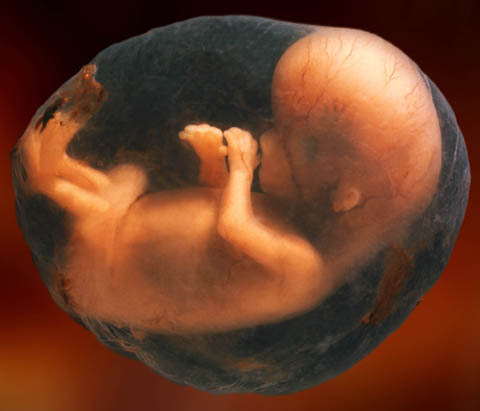
A potential victim of crime.

Zoe's Law is a bill currently before the New South Wales Parliament to amend the section of the Crimes Act dealing with grievous bodily harm, adding a specific definition of 'unborn child' (being a foetus of twenty weeks or more gestation, or a mass of at least 400g).

Most troubling for pro-choice advocates, it includes this provision:-


(2) For the purposes of an applicable offence:                                         
(a) an unborn child is taken to be a living person despite any rule of law to      
                          the contrary, and                                                           
(b) grievous bodily harm to an unborn child is taken to include the                
                          destruction of the unborn child. 

There are savings provisions to the effect that the section does not apply to medical procedures or acts by consent of the woman concerned. These exist to placate women worried about the erosion of their right to decide to legally terminate an unwanted pregnancy. Why we might be worried by this type of reform? We only have to look to Georgia, USA in 2011 - when a representative tried to pass a bill that put the onus on women who miscarried to prove they weren't guilty of murder. NSW Liberal MP Chris Spence, who introduced the bill, should be able to understand why women's advocacy groups are touchy on this subject. Granting personhood to a foetus is traditionally a legal position that has not boded well for a woman's right to choose to take a pregnancy to full term or not.

Mr. Spence has beseeched anyone with doubts about the intent of Crimes Amendment (Zoe's Law) Bill 2 (2013) to go read the second reading speech. Heavily doubt-laden, I did just that. I learned that the bill is a response to a case where a woman (Brodie) was crossing a road when she was hit by a drug and alcohol affected motorist. She was thirty-two weeks pregnant at the time.  The force of the impact caused extensive injury to her - shattering some of her bones. The previously healthy foetus, which she had named Zoe, was stillborn. The driver responsible was charged, and served jail time for the offence of grievous bodily harm of Brodie. Zoe was listed as an injury to Brodie, not a death in and of herself. The core part of this issue seems to be that the parents felt less vindicated in their grief because their unborn child was not treated as a person for the purposes of the Crimes Act.

Mr. Spence refers to a variety of legal mechanisms which apply only to a foetus lost after 20 weeks. The loss must be recorded with Births, Deaths & Marriages and certificates issued. The baby bonus is available. Maternity/grief leave is available. It seems an arbitrary line. In circumstances where a birth is happily anticipated by a mother, if the pregnancy fails at 19 weeks and two days we don't extend the baby bonus or maternity leave, and this feels arbitrary and wrong.  Does a matter of days or weeks make that much difference between the grief felt over a miscarriage? I suspect not. Drawing the line at 20 weeks for the state to include vengeance into criminal statute is similarly arbitrary and insufficient, if the goal is to give grieving parents satisfaction. It is an area which I think must be deeply personal and deeply subjective, and in such fields the law is an indelicate instrument.

Wednesday, May 25, 2011

Australia Has A Lot of Gay Friends, But...


Dear Local Australian MP,

In the world in which we live, the phrase "I have a lot of gay friends" is almost always a signpost for some form of bigotry. It usually prefaces words like 'but' or 'and', as though the speaker is keen to clarify that while they personally know plenty of gay people, they don't see a need for the political progress that is necessary to ensure that the LGBTIQ members of our community feel the full benefits of community membership and equal rights with their neighbours and friends. It is a peculiar and condescending kind of friendship that sees our friends treated with less respect and as lesser citizens purely because of the people that they love.

My friend Hannah spends long days working with Amnesty International, fighting for the political freedoms of people she will never meet. The Australian government won't let her marry her girlfriend, as though somehow their love is worth less than the love of any heterosexual couple, as though it is less considered, less passionate, less true.

My friend Victoria's parents nearly disowned her when she discovered she was in love with a woman. She faced harassment and bullying at school, a hostile home environment, and a government which sees a lesser recognition of the relationship she has suffered so much to realise and protect as unproblematic. She has always been a very traditional, family-oriented person, and marriage has always been important to her - her realisation that she would never be able to pledge her love and commitment to someone, exchanging rings and vows before trusted friends and family, was something that struck at the very core of her identity. I can't help but think that the hateful things she has heard were somehow made stronger because by not legalising gay marriage, the Australian government implicitly endorses the homophobic sentiments and attacks she has faced.

Another friend lives a life of quiet desperation, scared to acknowledge his longterm roommate as his life partner because he believes the most important relationship in his life is stigmatised in our community. He is a bright, senior and respected man who contributes a great deal to Canberra's community, and he feels that if people knew he was gay he would be respected less. Our Australia hurts him, too, because our government continues to signal to the him, and to our community at large, that there is something wrong with homosexual relationships, that there is something okay about treating the love between two men as somehow lesser. Our governments at territory and federal levels say "We have a lot of gay friends, but"; what we hear is that some loves are more equal than others.

So many Australians have similar stories. So many of us have brothers, sisters, family, colleagues, neighbours, friends - who are injured by the refusal of our politicians to take this necessary step - the simple recognition of gay marriage - to remove another bastion of inequality, another arbitrary barrier that serves only to harm. It is a move that costs so little, but means so much to so many.

Although I am not gay, I have a lot of gay, lesbian and queer friends, colleagues, neighbours. We share classes at university, cubicles at work, smiles on the bus in the morning on the way down Northbourne Avenue. We share a common humanity, we share dreams and aspirations for our own futures, and for an Australia which is fairer and more inclusive - an Australia which says that any dreams I may have of one day meeting someone I may want to marry are no more valid than similar dreams of my gay and lesbian friends.

I have a lot of gay friends, Mr. Local MP, and I'm tired of hearing my political representatives tell me that they personally support marriage equality, 'but...'. This is 2011. It is past time we stop making excuses for not helping our friends, for not protecting the members of our community. It is time our government stops quietly offering legitimacy to the sentiments of homophobes and bigots, and openly recognises that preserving marriage exclusively for heterosexual couples is the denial of a basic freedom which should be open to all Australians. Denying the LGBTIQ identifying people in our community any privilege otherwise open to heterosexual couples is discriminatory policy which belongs to an uglier era.

I trust that you will take these sentiments on board, and look forward to a more inclusive Australia.

Yours sincerely,

Canberran Curmudgeon

[This first appeared on the Letter Amnesty blog, where there are more brilliant, eloquent, poignant and strongly persuasive letters to MPs. It's a good place to start if you're inspired to write to your local representative to tell them how you feel about marriage equality.]